Announcements We want YOUR opinion: SavvyAuthors Survey

Hello!

Thank you for being a part of the SavvyAuthors community! We've put together a quick survey to learn more about the thoughts, needs, and wants for our members in their writing careers.

We are always looking to expand and make tweaks to the community in order to improve access and/or member experience. Please fill out our survey to let us know how you are enjoying the community, what you'd like to see more of, or what you'd like to see changed.

This survey will be available until Thursday July 3rd. If you have any questions or have any issues accessing the survey, please reach out to [email protected]

Thank you so much for all your support!

RJ
Upvote 0

Announcements New FREE On-Demand Video: Prayer in the Plotline with Stephanie Spann

Hey amazing writing community!

Stephanie Spann has shared a new on-demand video called Prayer in the Plotline. This can help you get in the right mindset to write and to also delve in your characters' minds too.

Check it out HERE.

Stephanie will also be teaching Slow Motion: Heighten the Depths of Deep POV starting on June 30th.

Please feel free to reach out to me [email protected] if you have any questions or if you have any questions for Stephanie.

Thank you!

RJ
Upvote 0

Announcements Workshops Starting June 23rd

Hello!

Here are the workshops that are starting the week June 23rd. Please don't hesitate to reach out if you have any questions ([email protected])
Thanks!

The SavvyCrew
Upvote 1

Hello there, I’m new here.

Hello there,

I’m Michael and I’m a librarian and an aspiring author. I grew up in New York City. I love the big city but I needed a break from the chaos. So my wife and I moved closer to her family in western pa. Her family has a big farm we get to spend time on every week.

In my free time I’ve been working on a series of picture books based on my kids imaginative playtime. So far I have two manuscripts written and drafts for two more. It’s my goal to find an agent to help me get these published.

I tried sending the first book to publishers on my own and got positive feedback. Now, I’m trying to take the next step to get published.

Besides writing books, I spent twenty years working in the media. My other goal is to write a book about my experiences working in the media. Everything I saw from the good to the bad and the ugly haha. I honestly I think I have some fun stories I want to get out there one day.

Anyway, I’d love to chat and make some contacts on here.

Michael
Upvote 0

Instructor Spotlight: Jodi Henley

What do you wish someone would’ve told you about writing or publishing?
I was at the NY RWA conference when Amazon was refused space and had to do its presentation in a coffee shop in the basement. I wish someone would have told me to jump on the bandwagon. I mean, they "did" but I wasn't listening. What is the biggest lesson that you learned about writing or publishing?

Sometime later, I got a job as an acquisitions editor for a small press. Until that point I'd been head down, studying, devouring books, workshops and lectures, talking to anyone who could possibly help me get better and more importantly, get published. Then I opened my first query letter and my head exploded. The biggest thing I've learned about writing is like the late, great editor, Hilary Sares of Kensington once said, "writing by committee makes everything sound homogenous.

What piece of information do you want to pass on to authors?
Know how things work, then trust yourself. Alpha and beta readers, editors and critique circles are only as good as their skill sets, and can sometimes have internal prejudice, or a strong preference for the way they think things should be. At a certain point, you need to be true to yourself even if how or what you're writing isn't on trend or doesn't fit current best practices. Every query letter I read when I was working for that small press--and I literally read hundreds of them--started with a question. That's like every contemporary romance featuring a secret baby, or every space marine going on a "bug hunt'. Yes, readers want secret babies and bug hunts, but not all of them.

Why do you like teaching authors?
Craft of writing is my passion. It's what I like, it's what I do, and it's why I got into editing. I'm an INTJ. I dissect and work with systems for fun. I teach to learn and understand, and I've been teaching for a long time. I love the mechanics behind it all and it makes me happy when I can share how things work and see people use it as a part of their own systems.

What’s your core philosophy when it comes to teaching writing?
I can tell you. And most of the time I'll try to show you. But no teaching method is universal. Sometimes there is a disconnect, either in the way I'm teaching because it doesn't sync with you. Or I'm assuming knowledge you don't have, or something just doesn't click. But I never, ever want to be that person who puts up a workshop and drops by to say "Great job!" I want to know you know. I want to see you understand. And I want you to see how well the tools work based on "your" input. If that means I need to write a ten page answer or put each tool through its paces so you understand the mechanics, I have no problems with it. From the minute I presented my first workshop back in '09, I promised myself that I would never give a low effort answer, because I took workshops, and I remember what it's like to be on the receiving end.

What do you believe is the most important thing a writing student should walk away with?
Whatever they came for. That's why I always ask. And if they answer, I try to make sure they get it. Workshops are a two way street. The more you interact, the more you get.

How do you approach giving constructive feedback without discouraging a student?
I work with a lot of complex concepts, and I "know" they're complex. I also know understanding something and applying it are totally different. That's why I appreciate even a half-hearted attempt, because it lets me see where the disconnect is, and it gives me some of their work to create an example. People work better when they understand WIFM, or what's in it for me, and how to get from point A to point B, not with generic examples, but with their own work. I never say something is wrong or bad or isn't meeting expectations. I show how they can use the tool and whatever they've done up to that point to get to the next step or the end. Sometimes it's a conversation (or a long conversation) and that's okay too.

How has your own writing influenced the way you teach?
I like to think it's more the workshops I took that influenced how I teach. I remember getting a one word answer in the first workshop I ever paid for, and I remember getting no response in many others. Yes, I'm a talker. I tend to ramble and tell really long stories to explain my points, but I'm trying to model the behaviors I wish I could have seen from my instructors when I first started out. I am a character-driven writer, so I tend to look at writing through the lens of character, conflict and structure rather than plot, but I try to be self aware and keep myself out of what's in a student's best interests or preferred writing styles.

Is there a common writing “rule” that you think is okay to break—and why?
I think there are a lot of common writing "rules" that are okay to break. Nothing I teach is a rule, because I don't believe in rules. I believe in tools, and if one doesn't work for you, I believe you should use a different one. Rules put constraints on writing, whereas tools help you to accomplish a task. I do think you need to follow the rules of grammar, for the most part. But in general, it's like vampires. You know how back in the day it was all Bram Stoker, and everyone "knew" vampires meant Dracula and evil blood-sucking monsters who came in through the window unless you had garlic or a crucifix? Then Christine Feehan came along and said, "No. Vampires are brooding, incredibly hot Carpathians trying to find their mates and have children so they can save their species from extinction. And it was like that for a very long time, until Kenyon came along and said, "Vampires are ancient warriors who live in New Orleans and were cursed by the goddess Arttemis. They aren't trying to have children, but they are fighting an eternal war against the Daimons." Then still later, J R Ward came along and said, "No! Vampires dress in black leather, drive Escalades and listen to rap." Rules are only rules until they're not. Pick the ones that work for you and ignore the rest.

Bio
Jodi has been an editor since 2009 and a developmental editor since 2011. After editing more than three hundred stories, She's put theory into practice for almost two decades.

Jodi Henley_Profile Pic.jpg
  • Like
  • Happy
Reactions: 2 users
Upvote 0

Announcements Workshops starting June 16!

Hello!

Here are the workshops that are starting the week June 16th. Please don't hesitate to reach out if you have any questions ([email protected])
Thanks!

The SavvyCrew
Upvote 0

Instructor Spotlight: Robin Jeffrey

How long have you been writing?
I’ve been writing with an eye to publishing for about fourteen years, but I’ve been a scribbler of stories ever since I was a little kid! Whether it was my own Nancy Drew mysteries or short stories about murderous neighbors, I’ve been writing every chance I can get throughout my life. I just can’t seem to stop! Thank goodness.

What piece of information do you want to pass on to authors?
I think the information I most want to pass on to authors is that you’re never too late. It’s never too late to start writing, to improve your writing, to try writing something new, to try your hand at publishing, at querying – whatever it is you’re thinking of doing in the writing space, it is NOT too late. The only time it’s too late is when they’re lowering the lid of your coffin. Until then, seize the moment! Try the thing! You have nothing to lose and everything to gain!

What does your day-to-day writing career look like? Where and when do you write, describe your desk and what you can see out the window, or do you write in cafes or hotel rooms or on the bus? Do you listen to music? Are you distracted sometimes, and if so, what is it that distracts you?
I try to write for at least a half hour every day at my kitchen table. The half hour comes whenever I can fit it in, though lately it's been happening during my lunch hour or right after I get off work. I've developed a ritual for my writing sessions that seems to help me get the words onto the page. Darkness is key for me; I have to work in a dark room. I turn on a local radio station for background music. Then, the final touch: I light a candle. Depending on what I'm working on, I have different candles I will light. Certain projects require certain smells to help me get in the right headspace. During the actual session, I start with a ten-minute writing sprint and then focus on one of my pieces for the remaining time. For the sprint, I just do a stream of consciousness writing style, typing out whatever thoughts come into my head. I used to get distracted often by my phone, so I've started putting it in a separate room while I write, so I can't even hear it if it goes off. That's really helped! Not having the device to reach for when I get blocked forces me to work through the problems on the page.

Do you have a book that you read again and again (and maybe underline passages)? What book? How does it inspire you? How and where did you come across it? What kind of condition is it in?
I do have such a book: Terry Pratchett's Reaper Man. I'm not much of one to write in books, but I have read Reaper Man somewhere between ten and twenty times since I first came across it in college. I discovered Terry Pratchett's Discworld series as a teenager after devouring Douglas Adams' Hitchhiker's Guide to the Galaxy and looking for something similar, but in the fantasy genre. Reaper Man has always stood out to me from the rest of Pratchett's work because of the way it deals with themes of death, rebirth, and exploring humanity's place in the universe. I myself as a writer have been drawn to exploring these same themes and I'm always impressed by how deftly Pratchett tackles these immense topics. I actually own two copies of the book. One is in pristine condition - a hard cover, whose spine I've never even cracked. The other, my original paperback copy, is in pretty sorry shape! But I would never part with it.

What do you believe is the most important thing a writing student should walk away with?
I believe the most important thing a writing student should walk away from any class with is a sense of excitement. Excitement to try new things and excitement for what the future of their writing holds. If you don’t leave a class (of mine or any others) feeling a certain spring in your step and an eagerness to try out what you’ve just learned, I think something is missing!

A person smiling at the cameraAI-generated content may be incorrect.


Author Bio​

Robin Jeffrey was born in Cheyenne, Wyoming to a psychologist and a librarian, giving her a love of literature and a consuming interest in the inner workings of people’s minds, which have served her well as she pursues a writing career. She currently calls the Pacific Northwest home, where she lives happily with her husband and their out of control comic book collection. She is the author of the urban fantasy romance series The Night, as well as the author of the scifi mystery series The Cadence Turing Mysteries. When not writing, Robin teaches writing workshops in the PNW area. To keep up with Robin and her writing, sign up for her newsletter on her website.

Social Media Handles​

Instagram - @thesidekic_ig
Facebook – Robin Jeffrey Author
BlueSky - @robinjeffreyauthor.bsky.social
  • Like
  • Happy
Reactions: 2 users
Upvote 0

Announcements Workshops Starting June 9th

Hello!

Here are the workshops that are starting the week June 9th. Please don't hesitate to reach out if you have any questions ([email protected])
Thanks!

The SavvyCrew
Upvote 0

Announcements SavvyAuthors lecture packages

Hey amazing writing community!

Did you know that SavvyAuthors is now offering lecture packages? You can find all the lecture packages on our main page under On Demand Classes.

Deb Bailey:
Angela Knight:
Romy Sommer:
Cassandra Carr:

L.C. Hayden

Please feel free to reach out if you have any questions or need any information. We are always adding new lecture packages so keep checking back.

Please feel free to let me know if there is a specific workshop that you missed and you'd be interested in the lecture package. You can reply to this message or reach out to me at [email protected].

Instructors, If you are interested in offering lecture package, please reach out to me [email protected]

Thanks for being a part of the SavvyAuthors community! We truly appreciate your support!

RJ
Upvote 0

Announcements On-demand video classes

Hey!

Happy Friday! I'm not sure if everyone knows, but SavvyAuthors has several on-demand video classes available. You can find all the on-demand video classes on our main page under On Demand Classes.

These are bite-sized videos that are jam-packed with information. You can learn at your own speed and watch them over and over again.

Angela Knight:

Judy L Mohr:

Please feel free to reach out if you have any questions or need any information. We will be adding more on-demand video classes in the near future.

Please feel free to let me know if there is a specific topic that you're interested in. You can reply to this thread.

If you are interested in presenting an on-demand video class, please reach out to me [email protected]

Thanks for being a part of the SavvyAuthors community! We truly appreciate your support!

RJ
  • Like
Reactions: 1 user
Upvote 0

Instructor Spotlight: Beth Daniels

How long have you been writing?
The first thing I wrote was when I was 12. My two best friends and I had run out of Louisa May Alcott’s stories with Jo March and our available supply of Nancy Drew, so I wrote something. All I remember about it was that I used “foliage” in it and one of my friends wanted to know what that was. I have to admit, at the time I thought, “I have dumb friends.” I wrote longer things in high school, and the few times I’ve gone to high school reunions someone always says, “you’re the writer!” The first novel length story was written when I was out of work in my late twenties. But my first book to get a contract was when I was 42. Publication was a long time coming. Obviously, I had a craft to learn.

What do you wish someone would’ve told you about writing or publishing?
You won’t get rich doing this.

What is the biggest lesson that you learned about writing or publishing?
Perseverance. I rewrote the first three books for over a decade, often starting from scratch based on comments in rejection letters. But once the first book got a contract, the others followed shortly behind it.

What piece of information do you want to pass on to authors?
There is no one way to write fiction, there is only the way that works best for you. I’m a pantser. In school I never could write an outline for an essay without writing the essay first. That’s still what works best for me. Just start the movie in my head and write what I “see” and “hear”. Oddly enough, I heard that when Nora Roberts got her start and Silhouette wanted a synopsis, they were surprised at how fast she got a completed manuscript to them after they green lighted it – because she was writing the book first, then the synopsis.

Why do you like teaching authors?
I taught English Composition at the college level for over a decade, a compulsory course for all Freshmen. They didn’t want to write essays. Both newly published and pre-published authors WANT to write. That makes it such a pleasure to connect with them in workshops.

What can students/registrants expect to takeaway from your workshop?
I hope they have that “I Can Do This!” state of mind, because they can! The hardest part is sitting down and actually writing. It’s not the writing itself, but the sitting in front of the monitor that’s the trick. Imposter syndrome is a myth if you’re writing and rewriting, improving. It only applies if you’re calling yourself a writer but not writing anything.

What’s your core philosophy when it comes to teaching writing?
If you want it bad enough, you can do this, but that also means going through several drafts. A coach doesn’t tell a player the first day of practice, “That was great. See you for the first game.” He says, “Good. Now do it again another fifty times then we’ll move on to improving a different part of your game.” I’m the coach suggesting that students try something a different way and explaining why that makes more sense. Yes, it’s fiction, but logic still rules.

What do you believe is the most important thing a writing student should walk away with?
More confidence that they can write characters to life and send them on one heck of a trip than they had the first day they wafted through the virtual classroom door.

How do you approach giving constructive feedback without discouraging a student?
I’m an idea girl. I can dream up so many other ways a story can go, so when I comment back, I offer suggestions and explain what a change will do to benefit the story and satisfy a reader. Usually, it’s an expansion or a clarification. So far, the writers in my workshops claim this makes perfect sense and are eager to run with it.

Is there a common writing “rule” that you think is okay to break—and why?
Perhaps these aren’t quite “rules” but things some editors discourage: I like inventing my own words (my students will be familiar with mentions of not just secondary characters, but thirdendary ones) and breaking the 4th wall, which I do more than once in each book in my latest series.

How has teaching writing changed your own work or perspective as a writer?
I launched off into genre niches I’d never considered before. My first books are nothing like those I write today. And actually, I think they are better and more creative now.


BIOGRAPHY
Beth Daniels made the decision to be a novelist when she was in the 7th grade. It took another 30 years before she got her first contract, and a lot of rewrites – from scratch! – along the way, but she’s now been a published novelist for 35 years and is still writing. She goes by many pseudonyms. Beth Henderson writes historical romantic mystery, romantic comedy, contemporary romance, and cozy mystery. J.B. Dane writes urban fantasy PI mystery comedy, dabbles with extraterrestrials and rewrites fairy tales into comedy tales. Nied Darnell writes Weird West Steampunk and 1920s Dieselpunk. She holds a BA in History and an MA in English Composition, taught at the college level and jumped on the online fiction writing workshop bandwagon in 2010, when it was shiny and new.

Find her on Facebook at Log into Facebook for Beth Henderson; Log into Facebook for J.B. Dane.

At Pinterest at https://www.pinterest.com/bhendbks/

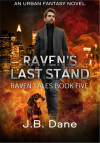
Beth Daniels_Book Cover.png Beth Daniels_Profile Pic.png
Upvote 0

Announcements Workshops starting June 2

Hello!

Here are the workshops that are starting the week June 2nd. Please don't hesitate to reach out if you have any questions ([email protected])
Thanks!

The SavvyCrew
  • Like
Reactions: 1 user
Upvote 0

Instructor Spotlight: Judy L Mohr (Writer, Editor, and Writing Coach)

Kiwi Judy L Mohr is a writer, developmental editor, writing coach, amateur photographer, and a science nerd. Within her studies as a writer and editor, she became obsessed with the mechanics of story structure and character arcs, as well as the little nuances associated with writing fight scenes. She has been able to pass on that knowledge and experience to writers from around the world, helping those writers feel more confident in their storytelling skills. When she isn’t writing, editing, or doing something within the local writing community, she can be found plotting her next foray into mischief and scouting for locations to hide the bodies. (Shh . . . Don’t tell anyone.) Follow her crazy adventures on her blog (judylmohr.com).

Social Media and Blog:
Personal blog: The Crazy World of Judy L Mohr
Facebook: Log into Facebook
Instagram: Login • Instagram
BlueSky: Judy L Mohr (@judylmohr.com)
LinkedIn: https://www.linkedin.com/in/judylmohr/
Goodreads: Judy L. Mohr
LinkTree: Judy L Mohr

How long have you been writing? What started you on a path to publication?
I’ve been creating stories or writing poems for as long as I can remember, starting with plays on the tape recorder with my dolls. (Yes, I’m that old that I remember tape recorders.) But I became serious about writing fiction while I was working towards my PhD.

In the beginning, writing was my escape from the high computational mathematics and the daily fights with the beast known as a computer. But after the PhD was successfully defended, I decided to look at what I had handwritten and see if there was something there worth pursuing. That was back in 2013, and I never looked back.

What do you wish someone would’ve told you about writing or publishing?
Writing is addictive. Eventually, it becomes an obsession that puts you on one hell of an emotional roller coaster.

There will be times when your family and friends will see how much you struggle (because they get to witness the extreme lows), and they will ask you to quit, because they don’t want to see you suffer. But if you’re anything like me, the thought of quitting makes you sick.

Repeating myself, writing is addictive, but in my case, it’s an addiction that I never want to give up, simply because it helps me process the world.

What is the biggest lesson that you learned about writing or publishing?
I have to be the master of my own path. I have to have enough faith and trust in my abilities to be willing to put myself out there, standing up for my work and standing before it, protecting it from those who wish to abuse it. If I don’t believe in myself, then why should anyone else?

What piece of information do you want to pass on to authors?
Learn to trust your instincts. And gain the strength to say, “No.” If someone is asking you to do something that doesn’t make you feel comfortable or doesn’t feel right for your story, then your instincts are trying to tell you something. Listen to them. You are better off walking away from questionable deals than to sign away your rights to your work.

Why do you like teaching authors?
Pay it forward. It’s my driving ethos.

I’ve learned so much from other writers over the years, but I can’t “pay it back”, because they already have the knowledge. Instead, I can pass on the knowledge and experience to those writers who are coming up right behind me. There is zero need to hold the knowledge close to my chest when so many writers could benefit from the knowledge.

What can students/registrants expect to takeaway from your workshop? What do you believe is the most important thing a writing student should walk away with?
It is my hope that writers taking my workshops and webinars will gain the confidence to take ownership of that title “writer”. I try to show that there is more than one way to look at a situation. We are only limited by our imagination. Writers are creative (even nonfiction writers). And we have something worth saying. So, let’s say it!

What’s your core philosophy when it comes to teaching writing? How do you approach giving constructive feedback without discouraging a student?
My coaching and editing style is one of mentorship, showing a writer how the technique works, how they might employ it in their own writing (using their own voice), giving them the skills to take ownership of their writing.

When providing feedback, I am honest, telling it how I see it, but I focus the comments 100% on the writing. When I’m suggesting rewrites to my clients and students, I will take a passage and reworking using their words, mimicking their voice. The goal is so they can see what could potentially be done using their own story and their own words. And I do what I can to highlight repetitive issues, allowing writers to learn how to recognize the issues on their own. They have the skills; they just need to learn to trust in those skills.

What writing habits or techniques do you emphasize the most in your classes?
Trust the instincts. Most writers come to writing because of their love of story. And even as children, they would have developed an instinct about pacing, character development, and structure. They just know when something feels off. What I’m teaching writers is not how to identify when something is off, but how to identify WHY something is off, and hence how to fix it. It’s about refining the instincts that already exist and backing it up with the theory to explain what they already know.

Is there a common writing “rule” that you think is okay to break—and why?
So many people say that we should write what we know, but that is wrong. Writers know about a lot of things, and if we don’t know about something in particular, we do the research required to learn about it. So, insisting that someone write about what they know is foolhardy.

Instead, we should write what we wish we could read. Because if we would want to read it, then I can guarantee that others would too.

How has your own writing influenced the way you teach? How has teaching writing changed your own work or perspective as a writer?
Some of my writing is experimental, where I’m challenging myself to try a new skill or do something that I wouldn’t normally do. I deliberately push myself outside of my comfort zone on a regular basis—particularly in the writing. And it’s because of this, I encourage my students and clients to do the same. And I remind them that it’s okay if something didn’t work the first time. No writing is wasted. Sometimes, it’s the process to get there that has the most value.

It’s that last bit that gets hammered home every time I work with a new writer. They remind me that what might seem so easy to me now wasn’t always easy to me. It was a process to get where I am. And when I see that new writer feeling dejected about the seemingly lack of progress, I’m right in there reminding them of where they were when they started and reminding them of how far they’ve come. And I point out to them that I was once where they are now, but I have years under my belt… and they’ve only just begun.

Current Release:
Dancing in the Purple Rain

Being special can make you a target
In a poisoned world, Michaella, a genetically engineered telepath, uncovers a web of lies and implanted memories when her closest friend is killed. Michaella must now rely on her personal AI and a 200-year-old playing card as she attempts to maintain her grip on reality to save herself and future generations from becoming emotionless automatons.

Dancing in the Purple Rain is available from a variety of retailers. See the full list at Dancing in the Purple Rain | JUDY L MOHR

Profile images and cover images for my latest release can be downloaded from Press Kit | JUDY L MOHR
Upvote 0

Announcements Workshops starting May 26th

Hello!

Here are the workshops that are starting the week May 26th. Please don't hesitate to reach out if you have any questions ([email protected])
Thanks!

The SavvyCrew
Upvote 0

Instructor Spotlight: Romy Sommer

Check out the spotlight video here!

------------

Why do you like teaching authors?
For me, teaching is a two-way street. I receive as much from my students as they do from me, and I get so much joy from seeing them grow, improve, and experience epiphanies.

What’s your core philosophy when it comes to teaching writing?
Every writer is different. I try to tailor my teaching and coaching to each student, to find out what they’re struggling with, what they need, and then use my experience to give them tools to overcome their specific struggle.

What do you believe is the most important thing a writing student should walk away with?
You are not doing things “wrong” just because you write differently to other writers. It is far too easy to compare ourselves to writers who write faster, publish quicker, are more active on social media, write differently, or who simply have different processes. But we are all beautifully unique.
You are on the right path for you, and what you’re doing is not “wrong” or “less than.” We all have different needs, goals, and different ways of measuring success, so don’t worry about what anyone else is doing. Just keep learning, keep growing, keep moving forward at your own pace to find what works for you – that is the path to your success.

How has teaching writing changed your own work or perspective as a writer?
I’ve learned to give myself a lot more grace. I used to put a lot of pressure on myself to get things right first time, but I’ve seen the incredible improvements writers can make even just working on a single manuscript, and it’s shown me that writing really is a multi-layered process, and that we really can turn the roughest draft into a book that readers will love.

------------

Romy Sommer is the author of seven contemporary romance novels published by HarperCollins London, and she has also indie-published a further eight books under her own name and a pseudonym. With her Hollywood romance novel, Not a Fairy Tale, Romy became the first South African to be nominated for the RWA Rita award in 2016. She is the author of two writing craft books, The Beginner’s Guide to Writing Romance and Character Wounding: Crafting Emotional Depth in Fiction.

As the founder and first chairperson of ROSA (Romance writers Organisation of South Africa), Romy discovered a passion for working with and growing aspiring writers which led to a new career as a writing coach and developmental editor. She pioneered writing courses for Savvy Authors, Now Novel, and RWA (Romance Writers of America) before joining Gemini Writer’s Studio.

Romy lives in Johannesburg, South Africa, with her menagerie of two talented teens, four cats, and a bearded dragon. In her former, pre-coaching life, she worked as a film production manager, first in movies and then in television advertising. She loves foreign language Rom Coms, travel, musical theatre, Formula One motor racing, and is obsessed with romantic K-dramas.

Links:
Author website: www.romysommer.com
Gemini Writer’s Studio: https://GeminiWritersStudio.com/
Amazon: Romy Sommer: books, biography, latest update
Goodreads: Romy Sommer
Book Bub: https://www.bookbub.com/profile/romy-sommer

Social media links:
Facebook: Romy Sommer Author
Instagram: Login • Instagram
Threads: Romy Sommer (@romy_sommer_author) • Threads, Say more
Pinterest: https://pinterest.com/romysommer/
  • Friendly
  • Like
Reactions: 1 users
Upvote 0

Announcements Workshops starting May 19!

Hello!

Here are the workshops that are starting the week May 19th. Please don't hesitate to reach out if you have any questions ([email protected])
Thanks!

The SavvyCrew
  • Friendly
Reactions: 1 user
Upvote 0

Filter

Like Savvy Authors?

Gain access to a variety of exclusive features.

Subscribe

Ready to learn?

View our on-demand classes!

View Classes

Join the SavvyAuthors Facebook Group!